Work with a Home Buyer’s Agent in Quincy MA
Interested in buying a home, condo or townhouse in Quincy? Then you need a local buyer’s agent that works for you, the home buyer, representing your financial interests.
MABA buyer brokers have committed to advocating and negotiating only for their buyer-clients. This loyalty commitment separates MABA buyer agents from the majority of other Massachusetts “buyer agents.”
Quincy, Massachusetts Information
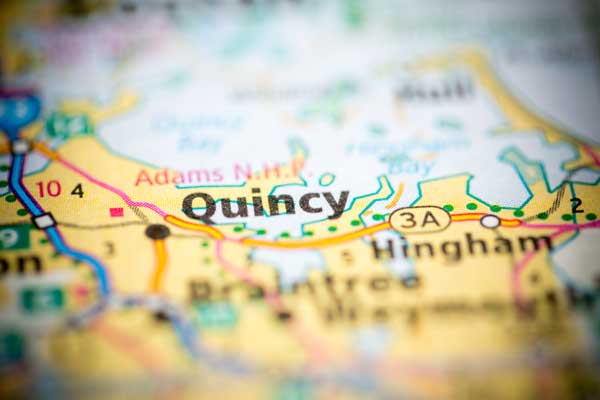
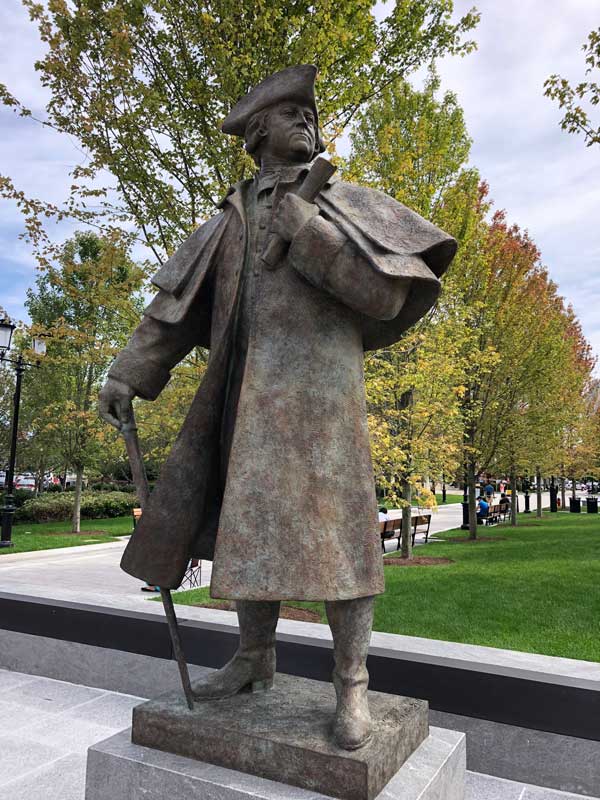
Quincy, Massachusetts (/ˈkwɪnzi/ KWIN-zee) is the largest city in Norfolk County, Massachusetts, United States. It is part of Metropolitan Boston and one of Boston’s immediate southern suburbs. Its population in 2014 was 93,397, making it the eighth largest city in the state. Known as the “City of Presidents,” Quincy is the birthplace of two U.S. presidents — John Adams and his son John Quincy Adams — as well as John Hancock, a President of the Continental Congress and the first signer of the Declaration of Independence.
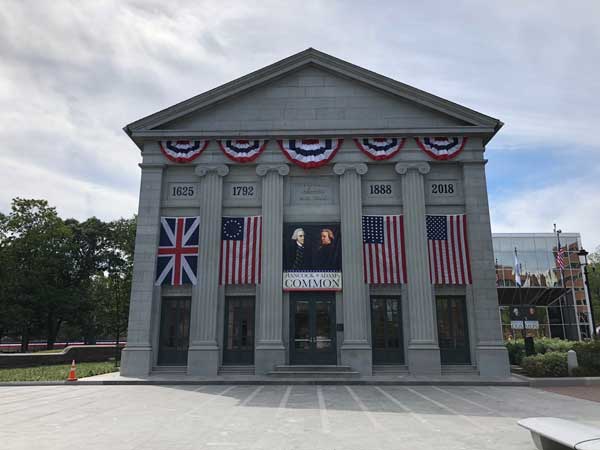
First settled in 1625, Quincy was briefly part of Dorchester and Boston before becoming the north precinct of Braintree in 1640. In 1792, Quincy was split off from Braintree; the new town was named after Colonel John Quincy, maternal grandfather of Abigail Adams and after whom John Quincy Adams was also named. Quincy became a city in 1888.
For more than a century, Quincy was home to a thriving granite industry; the city was also the site of the Granite Railway, the United States’ first commercial railroad. Shipbuilding at the Fore River Shipyard was another key part of the city’s economy. In the 20th century, both Howard Johnson’s and Dunkin’ Donuts were founded in the city.
Quincy, MA Schools
Quincy, Massachusetts is home to various educational institutions, public and private, including one early childhood education center, one Montessori school, one Catholic school, one college preparatory school, two colleges, Eastern Nazarene College, a private liberal arts and sciences college, and Quincy College, a private, localized college, two public high schools, five public middle schools, and 12 public elementary schools.
In the 19th century, the city became an innovator in progressive public education with the Quincy Method, developed by Francis W. Parker while he served as Quincy’s superintendent of schools. Four years after its implementation, a state survey found that Quincy students excelled at reading, writing, and spelling, and ranked fourth in their county in math.
Public primary and secondary education
Public education at the primary and secondary levels is managed by Quincy Public Schools, a system that includes one early childhood center, eleven elementary schools, five middle schools and two high schools.
Public high schools
North Quincy High School
Quincy High School
Public middle schools
Atlantic
Broad Meadows
Central
Point Webster
Reay E. Sterling
Public elementary schools
Amelio Della Chiesa Early Childhood Center
Atherton Hough
Beechwood Knoll
Charles A. Bernazzani
Clifford Marshall
Lincoln-Hancock Community
Merrymount
Montclair
Francis W. Parker
Snug Harbor Community
Squantum
Wollaston
Quincy, MA Demographics
As of the 2010 United States Census, there were 92,271 people, 38,883 households, and 42,838 families residing in the city, making it the eighth largest city in the state. The population density was 5,567.9 people per square mile (2,025.4/km2). There were 42,838 housing units at an average density of 2,388.7 per square mile (922.5/km2).
The racial makeup of the city was 65.5% White, 4.6% African American, 0.16% Native American, 24.0% Asian (15.6% Chinese, 3.2% Vietnamese, 2.6% Indian), 0.02% Pacific Islander, 0.85% from other races, and 1.76% from two or more races. Hispanic or Latino of any race were 4.6% of the population. 33.5% were of Irish (making Quincy the most Irish American city in the entire United States), 12.7% Italian and 5.0% English ancestry according to Census 2000. 77.1% spoke only English, while 8.0% spoke Chinese or Mandarin, 2.6% Cantonese, 1.9% Spanish, 1.5% Vietnamese and 1.3% Italian in their homes.
There were 38,883 households, out of which 20.7% had children under the age of 18 living with them, 38.7% were married couples living together, 10.5% had a female householder with no husband present, and 47.2% were non-families. 37.6% of all households were made up of individuals and 13.4% had someone living alone who was 65 years of age or older. The average household size was 2.22 and the average family size was 3.03.
In the city, the age distribution of the population shows 17.5% under the age of 18, 8.1% from 18 to 24, 36.1% from 25 to 44, 22.1% from 45 to 64, and 16.3% who were 65 years of age or older. The median age was 38 years. For every 100 females, there were 91.0 males. For every 100 females age 18 and over, there were 88.5 males.
The median income for a household in the city was $59,803, and the median income for a family was $77,514. Males had a median income of $51,925 versus $44,175 for females. The per capita income for the city was $32,786. About 7.3% of families and 9.8% of the population were below the poverty line, including 13.7% of those under age 18 and 10.1% of those age 65 or over.
Asian population
As of 2010 Quincy has the highest per capita concentration of persons of Asian origin in Massachusetts. As of 2003 about 66% of the Asians in Quincy are ethnic Chinese, giving the city one of the largest Chinese populations in the state. There is also a community of persons of East Indian origins, with most of them working in information technology and other skilled professions. A growing number of people with Vietnamese origins live in the area as well and make up the second largest Asian American group in Quincy.
Information is sourced via Wikipedia. No ownership is implied. Read more about Quincy on Wikipedia here.
Quincy Real Estate News
Massachusetts Association of Buyer Agents (MABA) is a non-profit organization dedicated to educating home buyers in Massachusetts about the benefits of using true buyer’s brokers and agents when buying a home in Massachusetts.
MABA buyer brokers have comitted to advocating and negotiating ONLY for their buyer-clients. This loyalty commitment separates MABA buyer agents from the majority of other Massachusetts “buyer agents.”


How to Buy a Second Home (Hint: It Won’t Be Like Your First): #MABA #Massachusetts #RealEstate #HomeOwner
How to Buy a Second Home (Hint: It Won’t Be Like Your First): MABA Massachusetts RealEstate HomeOwner As a home buyer, you braved the real estate buying circus when you bought your first home, and you have a great place to show for it. You’ve trudged through the open...

Can Changing Jobs Prevent You From Getting a Mortgage?: #MABA #Massachusetts #RealEstate #HomeOwner
Can Changing Jobs Prevent You From Getting a Mortgage?: MABA Massachusetts RealEstate HomeOwner Taking on a new job can be exciting. But if getting a new gig happens to coincide with your plans to buy a home, it can affect your ability to get a mortgage even if you...

Thinking About Building a Pickleball Court? Here’s What You Need To Know About Adding This Hot Amenity: #MABA #Massachusetts #HomeOwner #RealEstate
Thinking About Building a Pickleball Court? Here’s What You Need To Know About Adding This Hot Amenity: MABA Massachusetts HomeOwner RealEstate Your sister’s suddenly obsessed with it, your neighbors have formed a league, and kids are even playing it in gym class....

Nightmarish Neighbors, and How To Deal With Them Nicely: #MABA #Massachusetts #RealEstate #HomeOwener
Nightmarish Neighbors, and How To Deal With Them Nicely: MABA Massachusetts RealEstate HomeOwener There’s nothing quite like a bad neighbor to turn your little corner of paradise into a new kind of social minefield. And unless you’re fortunate enough to live in a...

ARM vs. Fixed-Rate Mortgage: Which Home Loan Is Better for You?: #MABA #Massachusetts #HomeOwner #RealEsate
ARM vs. Fixed-Rate Mortgage: Which Home Loan Is Better for You?: MABA Massachusetts HomeOwner RealEsate If you’re raring to buy a home, chances are you’ll need a mortgage. But which kind of mortgage should you get? Home loans aren’t one size fits all, but come in a...
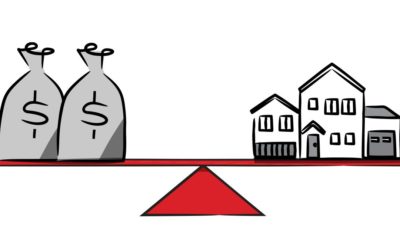
What Is Loan to Value Ratio? It’s the Key to Getting a Good Mortgage: #MABA #Massachusetts #RealEstate #HomeOwener
What Is Loan to Value Ratio? It’s the Key to Getting a Good Mortgage: MABA Massachusetts RealEstate HomeOwener The loan to value ratio (LTV) is a crucial factor if you’re buying a home and applying for a mortgage. So what exactly is this loan to value ratio, or LTV?...
Ready to Meet a Local Home Buyer’s Agent Who Will Represent Your Financial Interests?
Let a MABA buyer agent be your advocate and work for you during the home buying process. Contact us today.